

Centre for Law and Democracy Logo
 

Afghanistan: Comments on the draft Access Law

karzai2The Centre for Law and Democracy has prepared a set of Comments on the draft Access to Information Law published by the Afghan government. There have been discussions in Afghanistan about a right to information law for some time. It is a positive step that the government has published official draft legislation with a view to obtaining public comments on it.

“The draft provides a good basis for discussion about this key issue,” said Toby Mendel, Executive Director of CLD. “But it could still be improved in important ways to give fuller effect to the right to information.”

Click here for the Comments
Click here for the draft Law

CLD’s Comments make a number of recommendations to improve the draft law, including the following:
• The law should apply to all information held by public authorities, not just information which is needed to protect a right or improve a public service.
• The scope of information subject to proactive disclosure should be expanded to cover more information about finances and implementation of the law.
• The procedural rules should be substantially revised to make it easier to make requests and to streamline processing of those requests.
• The access to information law should prevail in case of conflict with secrecy laws, and the regime of exceptions should be narrowed by subjecting all exceptions to a requirement of harm and by adding a public interest override.
• The independence of the oversight commission should be strengthened and its powers enhanced.
• Sanctions for the wrongful disclosure of information should be replaced by protection for those who disclose information in good faith.

The Centre for Law and Democracy welcomes efforts to adopt a right to information law in Afghanistan, and urges the government to bring the draft law more fully into line with international standards before it is adopted.


Posted in News | Comments Off on Afghanistan: Comments on the draft Access Law

Canada: Serious Problems in Quebec’s Openness Law

Flag_of_Quebec.svgGiven the steady stream of corruption and mismanagement allegations that have emanated from the province in recent months, it is hardly revelatory to suggest that Quebec has a problem with transparency. A Submission released today by Centre for Law and Democracy (CLD) spells out in the detail the nature of these problems, and how Quebec’s legal framework for access to information needs to be changed to bring it into line with international standards in this area.

Click here to read the Submission

The Submission identifies a litany of deficiencies, including overly broad exceptions, the limited scope of the law, routine breaches of timelines and overcharging of requesters. It also notes that several public authorities, including ministers’ offices, municipalities and members of the National Assembly, are under no firm obligation to disclose any information, instead having the discretion to release information only when they feel this would be expedient.

“Previous studies carried out by CLD have found significant problems in every jurisdiction in Canada,” said Toby Mendel, Executive Director of CLD. “But even in this weak peer group Quebec is noticeably deficient. We urge the Government of Quebec to seize this opportunity to take action to put a stop to the culture of secrecy and the harm it engenders.”

The Submission was prepared for a general consultation and public hearing being held by the Province of Quebec’s Committee on Institutions that is meant to address, among other issues, the implementation of Quebec’s Act Respecting Access to Documents Held by Public Bodies and the Protection of Personal Information.

Posted in News | Comments Off on Canada: Serious Problems in Quebec’s Openness Law

Myanmar: Analysis of Government Press Law

20121120-aung-san-suu-kyiThe Centre for Law and Democracy (CLD) and International Media Support (IMS) today released Comments on the draft Printing and Publishing Enterprises Law (draft Law) released by the Ministry of Information of Myanmar in early March 2013. In August 2012, the Ministry tasked the Interim Press Council with preparing a draft Press Law, and the release of the draft Law by the Ministry came as a surprise to many observers. As the Comments make clear, the draft Law fails in important ways to conform to international standards regarding media freedom.

Click here to read the Analysis

“The important steps Myanmar has taken over the last year and a half to bolster respect for freedom of expression in practice now need to be anchored in a democratic legal framework,” said Toby Mendel, Executive Director of the Centre for Law and Democracy. “The draft Printing and Publishing Enterprises Law, the first draft media law to be formally published by the government, fails to do this.”

The CLD/IMS Comments make a number of recommendations, including the following:
➢ Consideration should be given to doing away entirely with the system of registration for publishers, printers, news agencies and imported publications.
➢ If registration is retained, it should be limited in scope, not involve onerous procedures and be overseen by an independent body.
➢ Any restrictions on the content of what may be published in the media should be in line with international standards and the Ministry of Information should play no role in applying these rules.

We urge the Myanmar authorities to allow the Interim Press Council to complete its work of preparing a draft press law, and then to hold discussions on legal regulation of the print media based on that draft.

Posted in News | Comments Off on Myanmar: Analysis of Government Press Law

IMF: Transparency Policy Needs Complete Overhaul

International_Monetary_Fund_logo.svgThe International Monetary Fund (IMF) has launched a review its Transparency Policy, last revised in 2009. As part of the Review, the Centre for Law and Democracy (CLD) has produced a Submission assessing the current policy against the standards developed by the Global Transparency Initiative (GTI) (www.ifitransparency.org). Some international financial institutions (IFIs) – including the Asian Development Bank, the World Bank and the Inter-American Development Bank – have made significant progress on transparency in the recent years; the IMF Policy, in contrast, remains limited to a proactive disclosure list approach.

Click here to read the Submission

“The IMF recognises the importance of transparency in its documents,” said Toby Mendel, Executive Director of CLD. “But it fails to give proper effect to this in its policy; the new policy needs to establish a proper presumption of disclosure with a full regime for making requests for information.”

The current IMF Transparency Policy is essentially a list of the documents that the IMF is committed to releasing proactively. Even for this list, the Policy grants extensive veto powers to States regarding information which relates to them. The Policy does not provide for any system for making requests for the vast majority of the information it holds. It also lacks other key elements of a proper presumption of disclosure system, such as a limited, harm-based system of exceptions and a right of appeal to an independent oversight body.

Posted in News | Comments Off on IMF: Transparency Policy Needs Complete Overhaul

Cambodia: Mam Sonando Released

Mam_SonandoCentre for Law and Democracy (CLD), the International Federation of Journalists (IFJ) and Lawyers’ Rights Watch Canada (LWRC) are pleased to note that Mam Sonando, a Cambodian broadcaster who had been detained for exercising his right to freedom of expression, has been released. He was released only after spending eight months in prison.

At an Appeal Court hearing on 14 March 2013, at the prosecutor’s request, the more serious charges against Mam Sonando, namely insurrection and incitement to take up arms against the State, were dropped, while charges of obstruction of officials and unlawful interference in the discharge of public functions were maintained, and a charge of and occupation of forestry land was added. The Appeal Court cut his sentence to five years, suspended the remainder of his sentence, but placed him on probation for three years. The probation may place Mam Sonando at heightened risk of further arbitrary detentions for peacefully exercising his right to freedom of expression.

We believe that the charges against Mam Sonando were politically motivated and unsubstantiated, as we made clear in a letter to His Excellency, Prime Minister Hun Sen on 5 October 2012 (available at: http://www.law-democracy.org/media/letters/).

Mam Sonando is the owner of one of Cambodia’s few independent radio stations and has been a prominent critic of the Cambodian government. His arrest was announced last July, the day after he appeared at the International Criminal Court to make a presentation to the Office of the Prosecutor on behalf of the Khmer People Power Movement on alleged crimes against humanity by the Cambodian government. Mam Sonando had been arrested twice before on spurious, politically motivated charges, both times after publicly criticising the Cambodian government.

We call on the Government of Cambodia to request that Mam Sonando be pardoned in relation to all charges. We also call on the government to respect the right of everyone, including those who criticise government, to freedom of expression.

Posted in News | Comments Off on Cambodia: Mam Sonando Released

Canada: Letter to Treasury Board Regarding CLD’s RTI-Rating of Canada

cropped logoIn February 2013, the Centre for Law and Democracy was contacted by the Canadian Press regarding a Memorandum from the Treasury Board disputing CLD’s RTI-Rating of Canada. The Memo makes two key points in defence of Canada’s performance on RTI. The first is that the RTI Rating only measures the letter of the law and not the strength of its implementation and the second is that, notwithstanding problems in the legal framework, Canada’s overall commitment to openness, and to open data in particular, is strong. CLD Executive Director, Toby Mendel, responds to both points and calls for Root and Branch reform of the Canadian Access to Information Act, along with major shifts in official attitudes towards openness.

Click here to read the Letter

“CLD welcomes Canada’s commitment to transparency as demonstrated through its strong proactive disclosure policies and membership in the Open Government Partnership (OGP). However, this has no bearing on the serious structural deficiencies at the heart of Canada’s right to information framework, which is what the RTI Rating exposes”, writes CLD Executive Toby Mendel. “If the Government of Canada were to put in place a process to reform the ATIA, CLD would be more than happy to participate in and support this. Only in this way could we return Canada to a position in the global rankings that is becoming of a democracy of its stature.”

Posted in News | Comments Off on Canada: Letter to Treasury Board Regarding CLD’s RTI-Rating of Canada

Myanmar: Workshops on Media Law Reform

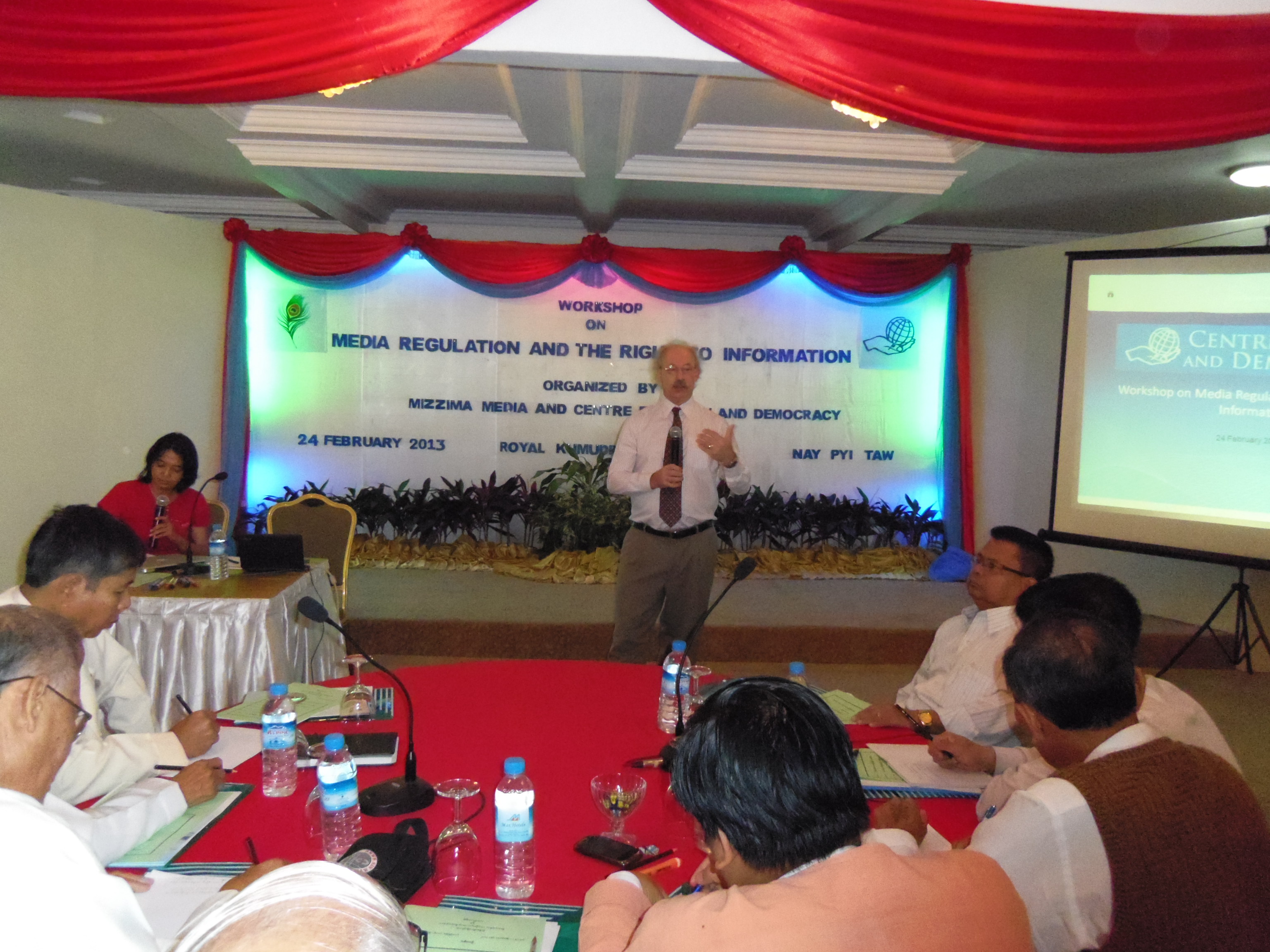
IMGP0021The authorities in Myanmar are drafting three pieces of media legislation as part of the process of transition to democracy: a print law (currently being prepared by the Interim Press Council); a broadcasting law (currently being prepared by Myanmar Radio and Television, MRTV); and a public service media law (currently being prepared by the Ministry of Information, MoI). Over the last week, the Centre for Law and Democracy (CLD) and Mizzima Media jointly hosted three workshops for different stakeholders – the media, civil society, political parties and members of parliament – to discuss international standards relating to freedom of expression and principles on media regulation.

“The huge interest in these workshops shows that different stakeholders in Myanmar appreciate the important role of freedom of expression and a free media in a democracy,” said Toby Mendel, Executive Director of CLD. “I was particularly impressed that over 40 parliamentarians attended the workshop in Nay Pyi Taw, most of whom stayed for the whole day.”

The workshops are part of a broader programme of providing support for the development of democratic media legislation, which CLD has been undertaking jointly with International Media Support (IMS), and which has involved workshops, technical advice meetings and written submissions on the three laws and related issues (such as the constitutional guarantees for freedom of expression and the draft code of ethics being prepared by the Press Council).

“Raising awareness about democratic systems of media regulation is a crucial part of the transition process”, said Thin Thin Aung, Director, Training and Education, Mizzima Media. “Without such understanding, the different stakeholders will not be able to play their part in ensuring that the laws which get adopted help to foster a strong, independent and diverse media in Myanmar.”

Posted in News | Comments Off on Myanmar: Workshops on Media Law Reform

Indonesia: Analysis of Draft Law on NGOs

National_emblem_of_Indonesia_Garuda_Pancasila.svgThe Government of Indonesia is proposing to replace its authoritarian 1985 law on civil society organisations (CSOs) with a new Law Pertaining to Mass Organisations. While this is generally a welcome development, an analysis by the Centre for Law and Democracy (CLD) highlights a number of serious problems with the draft Law, which is currently before the National Assembly.

Click here to read the Analysis

“One of the great successes of Indonesia’s transition to democracy is the extremely vibrant civil society that has flourished since the end of the Suharto regime in 1998,” said CLD Executive Director Toby Mendel. “The 1985 law should be replaced, but certainly not by a law that affords an even greater degree of government control over the activities of civil society.”

In practice, the 1985 law has not been applied since Suharto’s fall. Some of the more problematical aspects of the draft Law include:
• Broad powers vested in government to impose sanctions on CSOs without going to court.
• Illegitimate restrictions on the activities of CSOs.
• Unduly prescriptive rules regarding the way in which CSOs should be structured and managed.
• Rules which give the government a significant measure of control over the activities of foreign CSOs.

We call on the Government of Indonesia to reconsider the approach taken in the draft Law and to revise it to bring it more closely into line with international standards. The provisions which give officials greater control over CSOs are particularly problematical.

Posted in News | Comments Off on Indonesia: Analysis of Draft Law on NGOs

Indonesia: CLD and AJI Train RTI Experts

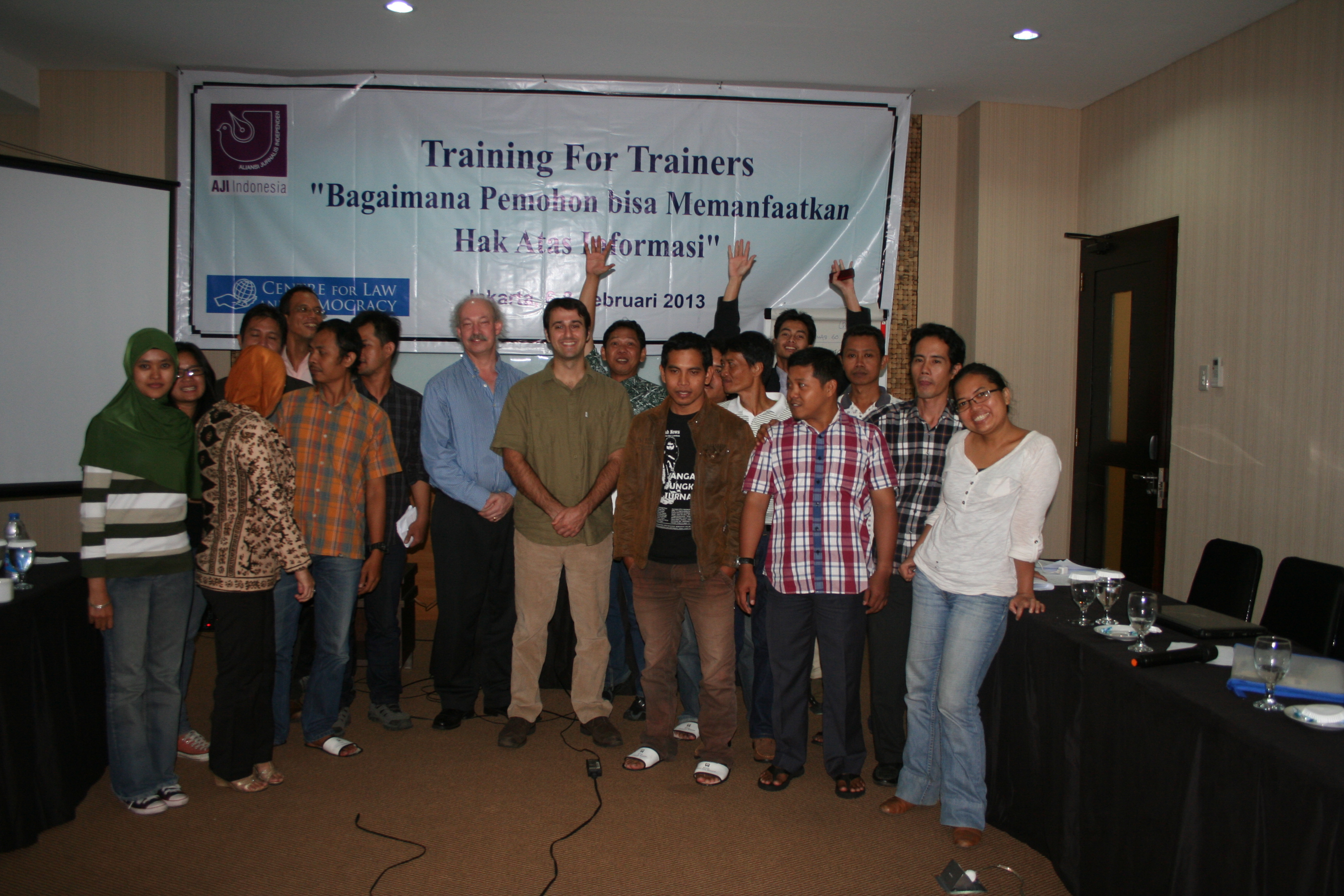
IMG_4374Weak civil society demand for information, combined with a lack of understanding about how to make requests for information, can be a major implementation weakness in countries seeking to implement new right to information (RTI) laws. To help address this problem in Indonesia, the Centre for Law and Democracy (CLD) and the Alliance of Independent Journalists (AJI) have just completed a training of trainers programme in Jakarta. Trainees from across Indonesia will follow up by conducting training programmes for civil society organisations in their home provinces of West Java, South Sumatra, West Nusa Tenggara and North Sulawesi. Those groups will then be expected to lodge a minimum of ten requests for information related to the areas in which they work, while the trainers will provide support to them through this process.

IMG_4385“Experience in many countries shows that weak demand for information is one of the key factors undermining successful implementation of RTI regimes,” said Toby Mendel, Executive Director of CLD. “We are seeking to build a core of groups in different parts of the country that have experience in making requests, which we hope will demonstrate the potential benefits of RTI for other groups working in their sectors.”

“Although it has been in effect since 1 May 2010, implementation of the RTI Law is still very weak”, said Eko Maryadi, President of AJI. “Public bodies have not taken the necessary steps to implement the law and they are still trapped in culture of secrecy.”

The training program is part of a broader programme sponsored by Open Society Foundations aimed at boosting the right to information in Indonesia. The programme also includes supply-side interventions, grassroots activities and the production of resource materials.

More information on the programme, as well as versions of the training manual in both English and Bahasa Indonesia and other resources, are available at: http://www.law-democracy.org/projects/rti-in-indonesia/.

Posted in News | Comments Off on Indonesia: CLD and AJI Train RTI Experts

Philippines: OGP Asked to Act on RTI Law Failure

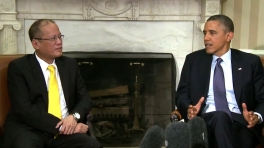
philippines-hd-2The 15th Philippine National Congress failed to pass a right to information (RTI) law, despite promises by the Aquino administration – to the Philippine people and in its Open Government Partnership (OGP) Action Plan – to ensure the adoption of this key democratic legislation. The Centre for Law and Democracy (CLD) and the Philippine based Institute for Freedom of Information have written to the OGP Steering Committee asking it to take action on this signal failure by the Philippine administration to live up to its promises and commitments. Efforts to adopt a right to information law, which continued until the very last minute, were ultimately unsuccessful, in circumstances reminiscent of the similar failure of the previous Congress.

Click here to read the Letter

“We have written to the OGP Steering Committee asking them to take action to signal to the Government of the Philippines that its actions are not in accordance with the norms and expectations of the OGP,” said Toby Mendel, Executive Director of CLD. “We believe that all Participating States should be expected to move decisively towards the adoption and proper implementation of an RTI law.”

The Philippine OGP Action Plan explicitly states that the FOI Act which the government had placed before Congress is a “critical component” of its Public Access to Information Initiative. Despite this, President Aquino failed to take the necessary steps to push for the enactment of the law by Congress, although this was well within his power. The situation is rendered even more unacceptable by the fact that the Philippines was an original OGP State and has been a member of the Steering Committee since the very beginning.

“We sincerely hope that the OGP Steering Committee takes decisive action in response to this fact that the Philippines still does not have an RTI law”, said Nepo Malaluan, Co-Director of the Institute for Freedom of Information. “If it does not, we believe that the credibility of the OGP will be at risk.”

The CLD/Institute for Freedom of Information letter includes as an annex a statement by the national campaign, The Right to Know, Right now! Coalition expressing deep disappointment about the failure of the Philippine authorities to adopt an RTI law.

Posted in News | Comments Off on Philippines: OGP Asked to Act on RTI Law Failure

Somalia: Analysis of Legal Framework for the Media

Image by Guled Hussein

Image by Guled Hussein

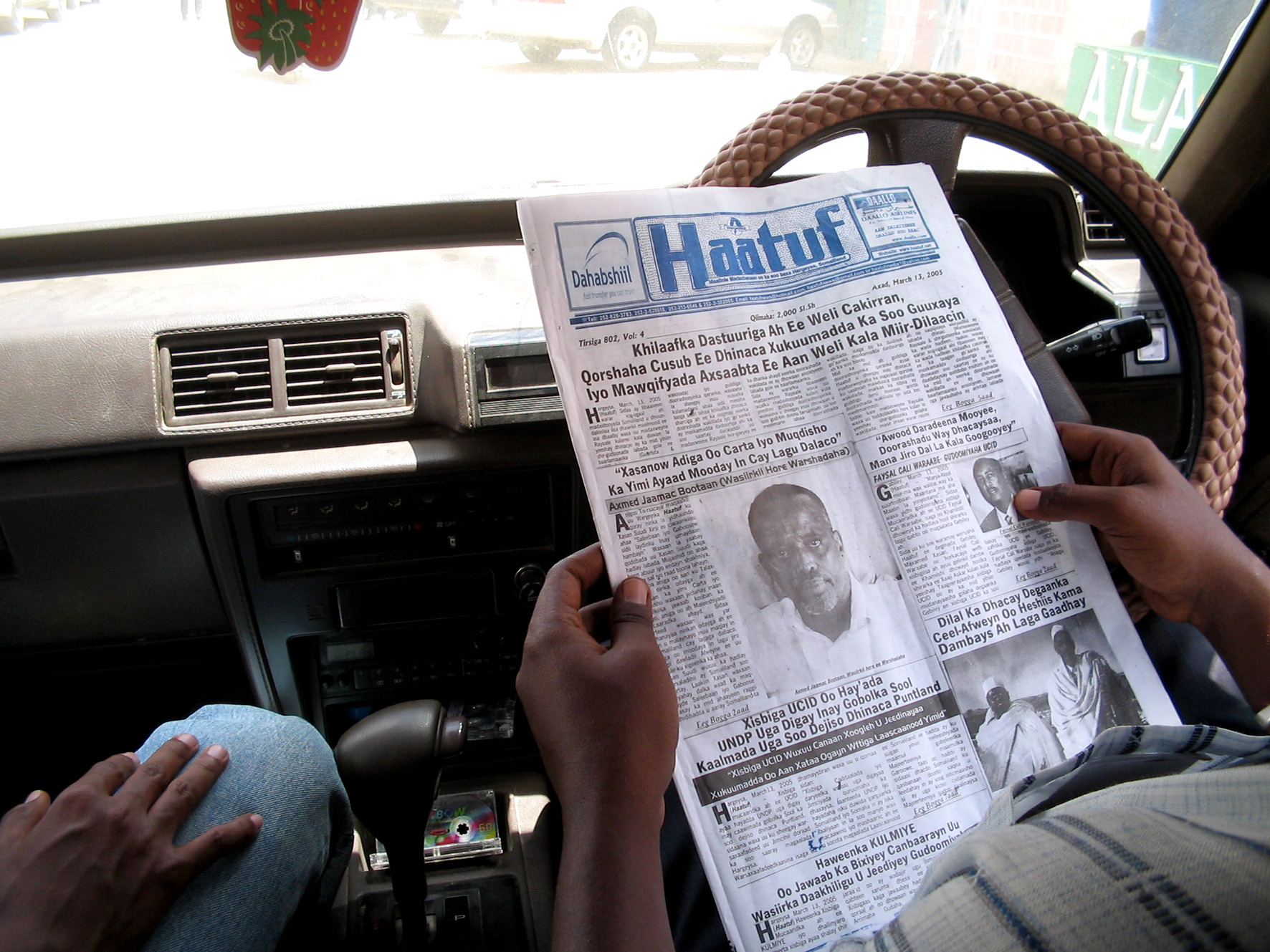
The Centre for Law and Democracy, working with the African Union/United Nations Information Support Team (IST), and in partnership with UNESCO, recently released the Somalia: Media Law and Policy Review, analysing the legal framework for media regulation in Somalia. There has been important progress in Somalia in recent months, with the drafting of an interim constitution, and the election of a parliament and a president. The Review is designed to help the new government move forward to implement media reforms in line with the interim constitution.

Click here to read the Review

“The situation in Somalia remains difficult,” said CLD Executive Director Toby Mendel. “But there is now an opportunity to move forward in terms of media law and policy reform, and we urge the government to take full advantage of this opportunity.”

A draft Communications Act being considered by the government of Somalia, which was the subject of a previous CLD analysis, should be finalised and adopted. This should be followed by a number of other actions, of which the more important are:
• Adopting detailed rules on broadcasting, in line with international standards, by establishing an independent regulator and providing for the licensing of commercial, public service and community broadcasters.
• Putting in place a more detailed legal regime for public service broadcasting.
• Abolishing onerous registration requirements and severe sanctions for the print media.
• Adopting right to information legislation.
• Bringing content restrictions into line with democratic standards, including by decriminalising defamation.

Click here for the CLD analysis of the draft Communications Act

We believe this is a historic moment for Somalia and we call on the government to deliver on its democratic promises to the people. A key part of this should include anchoring respect for the right to freedom of expression through a legal framework which is in line with international standards.

Posted in News | Comments Off on Somalia: Analysis of Legal Framework for the Media

Canada: Right to Information Law Needs Major Overhaul

Image by Jeff3000 and Matthew Samuel Spurrell, Wikipedia.

Image by Jeff3000 and Matthew Samuel Spurrell, Wikipedia.

Canada’s right to information system is broken and comprehensive legal reform is now an urgent priority. There has for some time been consensus on this among journalists, civil society, Information Commissioners and even Parliamentary committees. But successive governments have refused to take action to resolve the problem. On International Right to Know Day, 28 September 2012, Canada’s Information Commissioner launched a consultation to solicit broad national input into this issue. The Centre for Law and Democracy today released its Response to the consultation, calling for ‘root and branch’ reforms to bring Canada’s right to information into line with international standards.

Click here to read the Response

“We commend the Information Commissioner for launching this worthy initiative,” said CLD Executive Director Toby Mendel. “We hope that the federal government will finally undertake the long overdue reforms that are required to turn the Access to Information Act into the effective mechanism of government accountability that Canadians deserve.”

Canada was a global leader on this issue when it first adopted its legislation in 1982, but international standards have developed very significantly since then, and the country has fallen behind. It is now just in 55th place among the 93 countries which have adopted right to information legislation (see www.RTI-Rating.org).

Some of the key recommendations in CLD’s Response are the need to extend the scope of the law to cover the Cabinet, Parliament and the judiciary, the removal or tightening of several problematic exceptions and the introduction of a broad public interest override, the elimination of fees for lodging requests, the imposition of binding maximum timelines for responding to requests and empowering the Information Commissioner to make legally binding decisions. Perhaps most importantly, the Report recommends a wholesale change in attitudes towards disclosure, which remain adversarial and which fail to treat this issue as a human rights concern.

Posted in News | Comments Off on Canada: Right to Information Law Needs Major Overhaul

Nepal: Dekendra Thapa Prosecution Must go Ahead

Image by Krish Dulal

Image by Krish Dulal

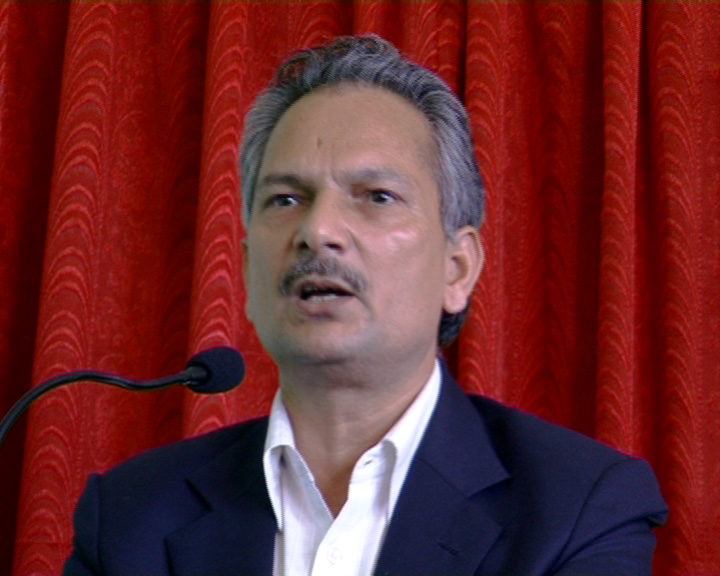
The Centre for Law and Democracy, as part of the International Media Mission to Nepal, has written to Dr Baburam Bhattarai, the Rt. Honourable Prime Minister of Nepal, urging him not to obstruct the murder case against Dekendra Thapa, a journalist who was brutally tortured and then murdered in 2004. From 3-5 January 2013, the police arrested five suspects in the case. However, reports suggest that the Prime Minister has sought to halt the investigation, on the basis that political crimes committed during the ten-year conflict period should, pursuant to the 2006 peace agreement, be dealt with by a truth commission. This is troubling in light of the danger that journalists face in Nepal, with their attackers often enjoying immunity from justice.

Click here to read the letter to Prime Minister Bhattarai

“This is a hugely important case,” said CLD Executive Director Toby Mendel. “While we respect the formal terms of the peace agreement, it has been six years since the agreement was signed and the truth commission has yet to be established. It would simply not be acceptable to halt an investigation into the murder of a journalist on the basis that it should be referred to the truth commission.”

Attacks on journalists and a prevailing climate of impunity have been one of the key foci of the International Media Mission to Nepal (IMM). The other has been legal and policy reform. The IMM visited Nepal in February 2012 and has since been engaged in various forms of support for freedom of expression in the country, working with our local partners, in particular the Federation of Nepali Journalists (FNJ).

Click here for the Joint Statement issued by the IMM at the end of its February mission.

Click here for detailed comments by the IMM on the constitutional proposals affecting freedom of expression and the media.

Posted in News | Comments Off on Nepal: Dekendra Thapa Prosecution Must go Ahead

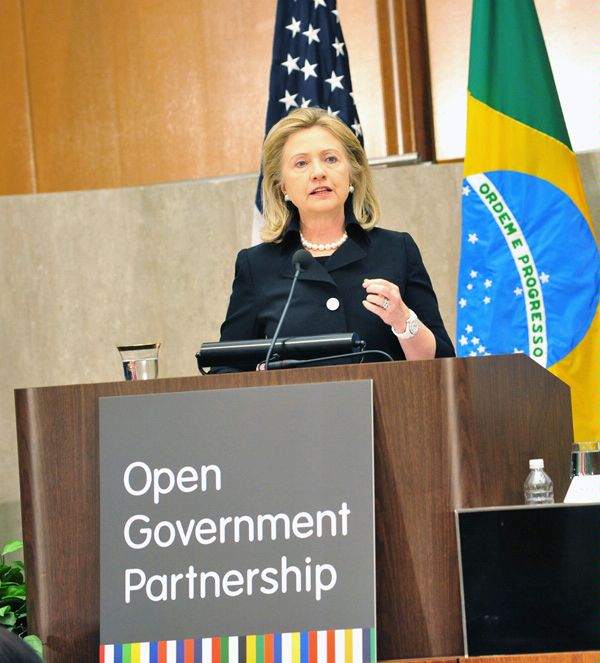
OGP: Guidelines for Assessing OGP Action Plans

US State Department Photo by Michael Gross

US State Department Photo by Michael Gross

The Centre for Law and Democracy is today releasing a Report – Making the OGP Effective: Guidelines for Assessing OGP Action Plans – which presents nine guidelines for assessing Open Government Partnership (OGP) Participating States’ action plans. The development and implementation of action plans is central to the whole OGP project: they contain the concrete commitments made by Participating States and hence the standards against which performance is measured. The guidelines are designed to be used by local stakeholders to assess the quality of country action plans.

Click here to read the Report

“Despite the importance of action plans, many are very poorly done and even the better ones stand to be improved significantly,” said CLD Executive Director Toby Mendel. “We hope that local groups find these guidelines useful to help them assess and then advocate for better action plans, which we see as one of the most practical ways of bolstering the impact of the OGP.”

The guidelines address a range of standards for OGP action plans, including the consultation process, the extent to which commitments are diverse, ambitious, relevant and new, the extent to which commitments are concrete, including through having clear timelines for achievement, the extent to which commitments cover all relevant actors and envisage progressive improvement, and whether plans include clear monitoring and evaluation frameworks.

These guidelines are a tool for anyone to use. CLD strongly encourages local stakeholders to take ownership of the guidelines, and to use them to assess the action plans which their countries have adopted. We are ready and willing to help with this process when requested. Otherwise, we hope local stakeholders will use the guidelines on their own, and we look forward to reading about the results.

Posted in News, Uncategorized | Comments Off on OGP: Guidelines for Assessing OGP Action Plans

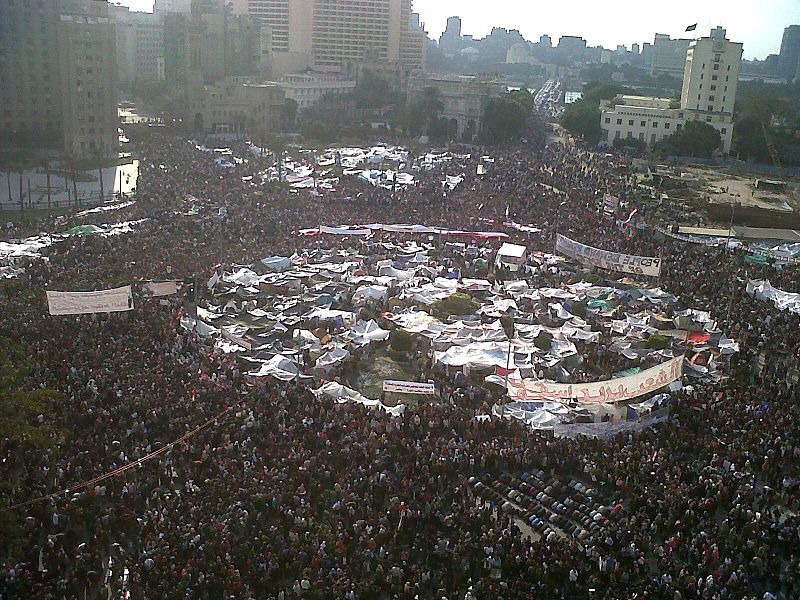
Egypt: Draft Constitution Leaves Wide Scope to Limit Rights

Tahrir Square Protests - Image by monasosh

Tahrir Square Protests – Image by monasosh

The Centre for Law and Democracy is today releasing its analysis of the provisions in the draft Egyptian Constitution that protect freedom of expression, information and the media, as the days tick down to the constitutional referendum scheduled for 15 December. Although the draft contains reasonably solid positive protections for freedom of expression, it leaves the scope for restrictions wide open, subject only to the “Principles of Islamic Sharia”. Providing strong constitutional protection for freedom of expression is essential if democracy is to be established in Egypt.

Click here to read the Analysis in English
Click here to read the Analysis in Arabic

“The draft Constitution contains some encouraging provisions, such as a guarantee of freedom of expression using any medium, recognition of the right to information and a shift away from licensing of newspapers,” said CLD Executive Director Toby Mendel. “But the draft signally fails when it comes to constraining the ability of the State to restrict freedom of expression where, instead of a clear and modern test based on necessity in line with international standards, there are references to principles deriving from one religious tradition and a range of general political, social and economic goals.”

Some of the more serious problems cited in the Analysis are that the draft Constitution:
• protects only the right to impart, but not to seek and receive, ideas;
• fails to clarify that the right of access applies to information held by public bodies;
• fails to establish a clear obligation on the State to grant licences for commercial and community stations to broadcast over the airwaves;
• envisages legal regulation of the establishment of Internet media;
• envisages restrictions on freedom of expression being justified by reference to the Principles of Islamic Sharia and a range of social goals; and
• imposes a number of broad and problematical direct restrictions on freedom of expression, including by prohibiting “insult or abuse” of religious messengers.

It is imperative that at least the more serious of these problems be addressed. We call on the authorities to revise these provisions before the Constitution is adopted.

Posted in News | Comments Off on Egypt: Draft Constitution Leaves Wide Scope to Limit Rights

Centre for Law and Democracy Participates in Speak Justice Campaign

Centre for Law and Democracy is pleased to announce its participation in the Speak Justice: Voices Against Impunity Campaign.

The Speak Justice Campaign is a global initiative to counter the prevailing climate of impunity for those who attach journalists. More than 660 journalists have been murdered since 1992. Reporting on corruption, crime, conflict and politics has proven deadly for far too many. Countless others have been threatened, attacked or harassed. These acts silence not only the immediate messengers but also foster a wider climate of self-censorship, undermining the ability of the media to hold power to account and to bring the light of public scrutiny to sensitive issues. In the end, it is the public as a whole, whose right to seek and receive information is affected, that is being attacked.

In 90 percent of the murder cases, no perpetrator has been brought to justice, feeding the cycle of impunity. In many cases, investigations are undermined by weak or apathetic authorities. Silence or indifference on the part of the wider public exacerbates the problem. Speak Justice: Voices Against Impunity is an opportunity to break this cycle by demanding justice for murdered journalists.

The campaign is powered by the Committee to Protect Journalists in collaboration with partner organisations. In line with our mandate to promote and protect freedom of expression, CLD is proud to be a partner in this campaign.

Posted in Blog | Comments Off on Centre for Law and Democracy Participates in Speak Justice Campaign

Philippines: Analysis Finds Major Problems in Cybercrime Law

Immediately after it was passed on 12 September 2012, the Philippines’ Cybercrime Prevention Act was met with a flurry of legal challenges from journalists and civil society organisations in the Philippines. An Analysis released today by the Centre for Law and Democracy confirms and supports their concerns, finding that the law perpetrates significant violations of international standards on freedom of expression.

Click here for the Analysis

“There is a widespread tendency for lawmakers to seek to apply rules to the Internet which fail to take into account its unique nature, thereby violating freedom of expression online,” said CLD Executive Director Toby Mendel. “It is possible to address legitimate concerns in a way which protects the free flow of information online; unfortunately, this law fails to do that.”

Some of the more serious problems cited in the Analysis are that the Cybercrime Prevention Act:
• extends existing criminal rules, including the country’s already problematic criminal defamation laws, to the Internet with no consideration of the specific implications of this, in most cases imposes even harsher penalties;
• grants law enforcement sweeping surveillance powers and requires the Department of Justice to block websites in cases of prima facie breach of the Act;
• grants Philippine authorities vast jurisdiction to police the Internet;
• criminalises mere recklessness and cybersquatting; and
• imposes very extensive data retention requirements on service providers.

The implementation of the Cybercrime Prevention Act has been suspended by the Supreme Court for 120 days, in order to allow the challenges against the law to proceed. We call on the Court to recognise the ways in which the Act breaches the right to freedom of expression, and for lawmakers in the Philippines to amend it so as to strike an appropriate balance between addressing crimes and respecting fundamental human rights.

Posted in News | Comments Off on Philippines: Analysis Finds Major Problems in Cybercrime Law

Comment on Measuring Openness: A Survey of Transparency Ratings and the Prospects for a Global Index by Sheila Coronel

Sheila Coronel’s paper, Measuring Openness: A Survey of Transparency Ratings and the Prospects for a Global Index, is the first serious piece of research about the systems for assessing government openness which have mushroomed in recent years, alongside a corresponding growth in overall interest in openness. It is useful inasmuch as it provides an overview of what is being done around the world, and also in its analysis of the challenging question of the practicality and utility of a global or super index. It largely misses the mark, however, in its assessment of existing systems, mostly because it compares them to the idea of a super index, rather than against their own objectives and the functional utility they actually provide.

A number of IGOs and NGOs have conducted or are developing systems for measuring the quality of government openness. Coronel’s paper divides these into five categories: rating right to information (RTI) laws; measuring transparency through a governance lens; evaluating RTI practice; assessing supply side interventions; and sector-specific initiatives. This mapping exercise is one of the strong points of the paper, providing those working in the field with an overview of what is going on.

This aspect of the paper could, however, be improved by providing a clearer overview of the various initiatives. As it is, the detail is somewhat buried in the text, leaving the reader to try to extract a broader picture on his or her own. A brief introductory statement at the beginning of each section (as in: “This section looks at the five main …”) or a table would help orient readers.

Another drawback with the paper is that it does not define what is meant by “openness” or “transparency”. As a result, it refers to initiatives which do not actually aspire to measure levels of access to information, such as governance indicators, without providing a clear critical analysis of what they assess or how extensive their assessment of the right to information is, in either law or practice.

The paper could also have made a more rigorous assessment of the content of the various indices which it cites, evaluating and comparing more precisely what they actually assess and how that data is obtained. For example, some of the governance indicators are based on very rough assessments of the legal framework for access to information and on a rather unscientific approach to assessing transparency in practice. The paper also qualifies some indicators as not being based on perceptions when a review of the questions and answers shows that they evidently are, at least in part.

By throwing governance indices into the bag without evaluating in any depth their access to information content adds a layer of confusion to the paper because it is not clear which indicators might be included in a possible “super index”. The paper could usefully evaluate what national and international research exists in specific areas of advancing transparency: legal framework, infrastructure, proactive disclosure, and reactive release of information.

A key thrust of the paper is to explore what the value of a global or super transparency index might be, and to assess whether such an exercise would be practical (logistically, in terms of funding, in terms of bringing various actors together). As an initial exploration of this issue, the paper makes a useful contribution here, in particular by exploring the various challenges in preparing such an index. It notes, for example, the enormous likely costs of such a venture, the challenges of bringing together sufficient expertise to prepare it, the many different actors, with sometimes divergent or competing interests, which have been involved in existing initiatives, and the difficulty of identifying what exactly it should measure.

It also addresses the utility of such a tool, recognising that it would be useful to donors and also as an advocacy tool, but also noting that it might oversimplify what is ultimately too complex an issue to be reflected in one index. The paper also tackles the question of whether a set of national or regional indices would be more useful than a global index, again noting pros and cons on both sides.

The paper could, however, be criticised for an undue focus on the idea of a super index, which many might deem to be a straw man. This is reflected in one of the headings: “VIII. The Ratings Paradox: Many Measures But No ‘Super Index’”. While catchy, this heading only makes sense if one starts from the assumption that there should be a super index. This becomes clear by analogy (no one would say: “So many universities but no super university”). As a result, we have not so much a paradox as a begging of the question. We do not believe that the idea of a super index is viable and note that indices and ratings in other sectors do not take this approach. A good example is the UNDP Human Development Index, which relies on only three key indicators: life expectancy, education and wealth. Other measures, including macro-economic indicators such as GDP, are based on agreed indicators which are measured by multiple actors rather than as part of one mega monitoring exercise.

One consequence of the focus on a super index is that the piece fails to explore the issue of what gaps are left by the other initiatives, apart from a very brief section at the end, since it works on the assumption that any gaps would be filled by a super index. This is a hugely important subject, which it would have been natural for a paper along these lines to broach.

We submit that a better approach would have been to assess the research gaps and then consider the best way to fill them. In particular, it would be useful to assess whether more extensive and systematic indices along the lines of or extrapolating from those that have already been conducted might largely satisfy the research needs that exist in this area.

Another consequence is the constant theme running through the paper that there are too many indices, as reflected in the claim that the openness community “suffers from a surfeit, rather than a lack, of indices”. This is not supported by proper analysis, for example showing that there was no cost-benefit correlation to a particular body of work or that there is unnecessary overlap and repetition in the indices. In some cases, highly contestable claims are made. For example, the paper states in several places that there is no dearth of comparative assessments of RTI laws. While it is true that several indices do include a few indicators relating to RTI laws as part of a wider basket of openness measurements, so far only the Access Info Europe and Centre for Law and Democracy RTI Rating claims to be a rigorous assessment of legal quality in this area. Prior to the existence of the harmonised standards proposed by the RTI Rating, national groups had no proper framework for comparing their country’s law with that of other countries.

The focus on a super index leads to the most serious shortcoming in the paper, namely its assessment of the value of the existing indices. Thus, indices are repeatedly criticised for not being global in nature or for only measuring certain types of openness, while in other cases indices are praised simply because they measure more features. In very few cases is reference made to the underlying purpose of the index in question, whether this is a useful purpose, or the extent to which the index satisfies the purpose. This is a bit like criticising a Ferrari for not being able to carry a family of four, on the basis that it does not meet all of the needs one might wish for in an automobile.

This shortcoming is clearly evident in relation to the RTI Rating, developed by our two organisations, which comes in for strong criticism because it only assesses legal protection and not implementation. This fact and its implications have been acknowledged from the beginning. What the paper fails to recognise, however, is that as a tool for legal improvement – a matter of not inconsiderable importance to which enormous energies are being directed in countries around the world – the RTI Rating has consistently proven its value. This is reflected, among other things, in the very high demand for it. Ensuring a strong legal framework for access to information is an indispensable step towards increased government transparency in practice in countries around the world. Many civil society organisations are campaigning for a stronger legal framework and the RTI Rating provides valuable comparative arguments to support such campaigns. No doubt many of those responsible for the other indices covered in the paper would make similar claims to the effect that their own indices also serve useful purposes in the various different sectors they address.

Coronel’s paper will hopefully initiate more of a debate among advocates about existing initiatives to measure government openness, something which would undoubtedly prove useful. Despite the criticisms above, the paper provides us with a good starting point for this debate, which we should take advantage of. A natural next step in this process would be to host a workshop bringing together some key players – people who have been involved in developing existing indices, both on transparency and in other areas, academics and civil society groups who have used the indices – to identify gaps in the existing research and look at ways to address them.

By Helen Darbishire, Executive Director, Access Info Europe, and Toby Mendel, Executive Director, Centre for Law and Democracy

Posted in Blog, News | Comments Off on Comment on Measuring Openness: A Survey of Transparency Ratings and the Prospects for a Global Index by Sheila Coronel

Review of ELLA (Evidence and Lessons from Latin America) Programme Materials

Below is an Expert Review of the ELLA materials on Transparency and Access to Information, specifically the Guide on the Latin American Approach to Transparency and Access to Information, and the Practice Briefs on Building the Legal Framework to Support Transparency and Access to Information in Latin America, Fighting Corruption by Improving Transparency and Access to Information, Civil Society’s Regional Network for Advancing Freedom of Expression and Access to Information, and Using Information for Accountability and Justice: Lessons From Latin American Civil Society.

The ELLA materials can be found here. ELLA seeks to provide a knowledge sharing and learning platform on selected economic, environmental and governance issues from Latin America.

ELLA Expert Reviews: As part of ongoing efforts to ensure quality in our research and communications, the ELLA team asks recognised experts to conduct reviews of the knowledge materials in a given theme and produce a short written response. The purpose is to highlight a range of distinct perspectives amongst experts in the field and link readers with additional research, cases and arguments that the original ELLA materials may not cover. This Expert Review is also available on the ELLA website here.

Overall, these materials provide an excellent overview of the very significant and often innovative developments in the region in terms of transparency. As such, they will be useful for those working on this issue both within the region and globally.

As a general comment, the materials focus on the legal environment, corruption, the regional network and accountability. Another key benefit of access to information is facilitating participation in decision-making. It might be interesting to consider producing a fifth Practice Note on this important issue. Otherwise, in some places the materials seem to focus exclusively on positive developments, although a few sections do also highlight challenges. While the positive developments are impressive, at the same time it would also be useful to include some of the challenges faced in the region.(1) Finally, though the comparative assessments only focus on Africa and South Asia, given they are the target regions of the initiative, other regions, especially Southeast Asia, could also benefit from the work.

Below, observations and suggestions for additional considerations are presented regarding individual knowledge materials.

Guide on the Latin American Approach to Transparency and Access to Information
The Guide opens with the following statement: “Transparency and the right to access information is now a reality in many Latin American countries.” Unfortunately, this is not quite correct. What is true is that a majority of Latin American countries have passed access to information laws but, as the Key Lessons Learned describes, translating this into reality remains a challenge in many countries.

The first Key Lesson Learned notes that regional and national court rulings have helped create a legal framework for access to information even in the absence of freedom of information acts (FOIAs). This is true, but at least as importantly, these court rulings have had another key impact: supporting local campaigns to adopt local laws (as the international rulings have required). This is recognised later in the Guide but not at the front end. Ultimately, access to information can only effectively be protected through a FOIA.

Although the Guide refers to several standard setting initiatives in Latin America, it omits one which is quite important, the Inter-American Juridical Committee’s Principles on the right of access to Information.

The section on national FOIAs claims that many Latin American laws incorporate ‘innovative elements’ in their design, such as establishing oversight bodies and requiring public bodies to disclose information proactively. While these are certainly positive features, and the Mexican oversight body, the Federal Institute for Access to Public Information (IFAI), is one of the strongest in the world, it is not actually correct to describe these as innovations, as they are found in many older access to information laws.

In contrast, the electronic systems in Mexico and Chile are defined as “good practice in the region” but in fact these systems are more than just reference points for the region, they are actually global leaders. The Claude Reyes case was also a global leader, it being the first international court to adopt such a decision. It is fair to go even further and note that the European Court had consistently refused to recognise a right to information, and that recognition by the Inter-American Court played a rule in pushing the European Court towards recognition in the 2009 case, Társaság A Szabadságjogokért v. Hungary.

The Guide discusses ‘targeted transparency policies’ as though they were a new phenomenon but, although the term was only coined in 2007, in fact there has been a reasonably long-standing practice of this in many countries. This is better seen as a process of evolution of the wider practice of proactive disclosure than a specific new development. Indeed, the whole development of e-government is closely linked to this.

Finally, the Guide describes Colombia as a country without a FOIA, but all of the leading lists recognise that Colombia does have a FOIA, albeit a rather weak one.(2)

Practice Brief on Building the Legal Framework to Support Transparency and Access to Information in Latin America
One overall comment is that this Practice Brief regularly refers to ‘citizens’ as the group enabled to make requests but in fact better practice is to allow anyone to make such requests.

The Key Lessons Learned highlights three features of FOIAs: broad scope, sanctions and an oversight body. This seems to be somewhat arbitrary, as there are several other features that are at least arguably equally important, such as good procedures for processing requests, a narrow regime of exceptions and effective promotional measures. The sections on innovative elements are a bit broader, but they also omit the issues of exceptions (at least in the list on page two, although there is a short section on this on page four) and promotional measures. Latin America has contributed some interesting innovations in the latter area, for example in terms of requirements of public education about the right to information, which it would be useful to highlight.

Once again, the claim that Latin American countries have been at the forefront of designing and enacting innovating FOIAs is probably overstated. While there have been strong developments in this region, the same is true of East and Central Europe and Asia, and to a lesser extent Africa.

The section on scope defines this as the range of public bodies covered by the law; this is certainly important but the issue also extends to the range of types of information covered, which is limited in some laws in the region. The section on sanctions and protections refers to protection for whistleblowers, but it is also important –probably even more important in terms of changing the culture of secrecy – to provide protection to civil servants who disclose information in good faith pursuant to the law. In the area of procedures, it would be useful to add in that Latin America is again a world leader in terms of measures to enforce timelines. The section on exceptions refers to the need for a harm test, but it omits to mention the equally important need for a public interest override, unfortunately something that Latin American laws are weak on.

Practice Brief on Fighting Corruption by Improving Transparency and Access to Information
This Practice Brief contains a good description of two key openness systems for reducing corruption, procurement and official asset disclosures. The claim that the region pioneered the former is a bit overstated, although the region has certainly introduced some interesting innovations.

A third transparency approach might also be worth mentioning, namely the proactive publication of information about all beneficiaries of public programmes. This has the potential to significantly reduce corruption. While this information would be considered private in most countries, it is its potential to reduce corruption that justifies making it public (ironically, legally this would be pursuant to the public interest override that is missing in most Latin American laws). It would, therefore, be interesting to assess the way these systems function in practice.

Practice Briefs from the Civil Society Perspective: Civil Society’s Regional Network and Using Information for Accountability and Justice
This Practice Brief contains an excellent description of the work of the Alliance across the region. It might benefit from adding in a bit of a description of the global network which preceded it, FOIAnet, as well as at least a reference to the regional networks that exist in South Asia (SARTIAN) and Africa (AFIC). This would provide readers with a sense of the wider context in which the Alliance works, as well as examples of the work other similar groups are doing.

Once again, this presents a very good overview of some of the ways information has been used for accountability. Two comments here. First, in the absence of a full Practice Brief on participation, it might be useful to discuss here some aspects of how information can foster participation. Second, it would be interesting to add in here a section on challenges Latin American civil society has faced.

1. One useful resource which compares all of the access to information laws in the region is Mendel, Toby, The Right to Information in Latin America: A Comparative Legal Survey (2009, Quito, UNESCO).
2. See, for example, the RTI-Rating, available at: http://www.rti-rating.org/index.html.

Prepared by Toby Mendel, Executive Director, Centre for Law and Democracy

Posted in Blog, News | Comments Off on Review of ELLA (Evidence and Lessons from Latin America) Programme Materials

Canada: UN Universal Periodic Review Submission

This image is the logo of the OHCHR, and is their intellectual property. Its use here does not imply that OHCHR endorses CLD's work.

This image is the logo of the OHCHR, and is their intellectual property. Its use here does not imply that OHCHR endorses CLD’s work.

The Centre for Law and Democracy, in collaboration with four other civil society groups – the BC Freedom of Information and Privacy Association (FIPA), Canadian Journalists for Free Expression (CJFE), Lawyer’s Rights Watch Canada (LRWC) and Pen Canada – provided a Submission to the UN Human Rights Council’s Universal Periodic Review (UPR) process on Canada. The Submission focuses on freedom of expression and the right to information issues in Canada.

Click here to read the Submission

“Canada generally has a strong record on human rights,” said CLD Executive Director Toby Mendel. “But it also has some significant weaknesses, including in relation to freedom of expression and access to information, which need to be addressed if democracy is to continue to flourish.”

Some key problem areas identified in the Submission include:
• Weak protection for the confidentiality of sources of information.
• A failure to respect the rights of journalists covering demonstrations.
• The retention of criminal defamation laws.
• Poor legal guarantees for the right to information.
• Limited protection for whistleblowers.
• Insufficient attention to promoting universal access to the Internet, particularly among First Nations communities.
• An emerging practice of passing repressive laws during protest events, only to repeal them after the demonstrations have ended.

Posted in News | Comments Off on Canada: UN Universal Periodic Review Submission